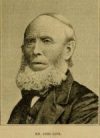
James Caldwell (1818-1909), Writer, Paisley

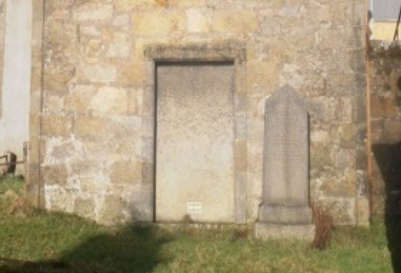
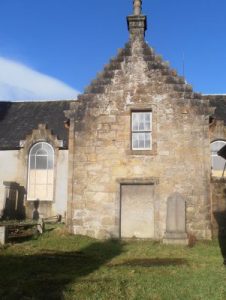
James Caldwell erected a grave stone in Kilbarchan Parish Church, beside the now blocked Beltrees Door, in memory of his parents and siblings. His father was a silk handloom weaver in Kilbarchan. Although James was born into a Kilbarchan weaving family James did not follow the weaving trade. He became a writer (lawyer) in Paisley and lived with his wife, Janet, and their large family in Craigielea Place in Paisley.

James Caldwell was a prominent gentleman in the Paisley and had a plethora of varied interests. He was a member of Paisley Burns Club and of the Society of Antiquaries of Scotland. In 1874 he was one of eleven members of Paisley Burns Club who attended a meeting held in the Mason’s Arms in Kilbarchan to celebrate the hundredth anniversary of the birth of the Kilbarchan poet, Robert Allan. He acted as lawyer for Kilbarchan General Society and is likely to have been a member. He also had a keen interest in local history and collected and transcribed old manuscripts. Four handwritten letters from the correspondence of the Paisley poet, Robert Tannahill (1774-1810) were in his collection.
He maintained his long-term interest in the history of Kilbarchan. He had in his possession The Rental Mrs Napier’s Estate, 1785. This document detailed the names and feu duty paid by the hundred and nine residents who lived in houses in Kilbarchan built on Milliken lands. James Caldwell gave this document to Rev. Robert MacKenzie who included it in the appendix of his Kilbarchan, A Parish History. James had also in his possession the Kilbarchan register of baptisms and marriages. Three years after his death in 1909, this document was edited by Francis Grant of the Scottish Record Society and published as The Index to the Register of Marriages and Baptisms in the Parish of Kilbarchan, 1649-1772.  These valuable resources are still of considerable relevance in family history research today.

A less academic interest was wood turning.  In 1873 James acquired wood from the last fir tree cut down in Craigielea Woods and turned sixty cups from the solid wood to gift to his friends. He inscribed two verses of Tannahill’s song, ‘The Bonnie Woods of Craigielea’ on one side and the words ‘This caup, made from part of the Bonnie Wood of Craigielea’ on the reverse.

James Caldwell lived to the age of ninety-one and is buried in Woodside Cemetery in Paisley.

©2019 Helen Calcluth

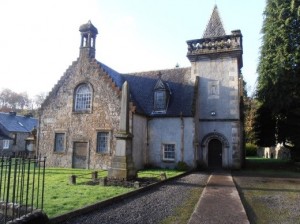
Kilbarchan Old Parish Church Building


Kilbarchan Old Parish Church Building

Kilbarchan Old Parish Church,

The old Kilbarchan Parish Church building, with its long history and its unique appearance, is of great significance in the heritage of the village. There has been a church building on the site since, and probably before, the late middle-ages when in 1401 Thomas Crawford of Auchinames built a small chapel, dedicated to St. Catherine, in the kirk yard. In the 12th century Kilbarchan Parish Church had come under the jurisdiction of Diocese of Glasgow and later of Paisley Abbey. After the Reformation things changed and in 1590 the church became part of the newly formed Presbytery of Paisley. In the 17th century the Cuninghames of Craigends, as Patrons of the church, had a private aisle and burial place within the building.

By 1724 the church building was in a sad state of repair. The heritors appointed James Baird, a mason from Govan, to rebuild the church. Parishioners assisted in the work. The main body of the church was demolished, leaving only the Cunninghame Aisle, with its crow-step gable upstanding to be incorporated in the new building.  A small bell tower was erected on the west gable and a to-fall was built on the south wall as a burial place for the Houstons of Johnstone Castle.  Eight years later George Houston sold his estate to James Milliken and the to-fall became the burial place of the Milliken family and was thereafter known as the Milliken Aisle. The interior of the church had lofts or balconies at the east and west gables.

In 1792 a separate one storey session house was built in the churchyard.  Apart from the building of an additional storey on the Milliken Aisle, little change was made to the main church building before 1858 when architect, Alexander Kirkland, was appointed to make alterations to the building. The main part of the church was extended on the north by twelve feet and the tower on the north-east corner of the building was added. This increased the seating capacity of around 400 in Baird’s original building to 550.  Robert MacKenzie, the minister from (1895-1934) described the building as presenting ‘an artistic though somewhat quaint and unusual appearance’. It is now a B-listed building.

Since 1858 only minor functional extensions have been added to the exterior of the building which has served as the Church Hall since the new church was built in 1901. In 2018 both church buildings were sold by the Church of Scotland. The 1901 church will be made into flats, but the future of the 1724 old Kilbarchan Parish Church building has not yet been decided. Hopefully, it too will be preserved in some form and continue as an iconic focal point in the village.

© 2019 Helen Calcluth

John Love, a Kilbarchan Weaver

John Love (born in 1806) was a typical Kilbarchan weaver. He was also a well renowned bee-keeper.

In 1841 he and his wife Mary lived in the upper storey of Mount Pleasant, the last house on the right in Shuttle Street. Mary’s brother Robert Climie, her two sisters and her widowed mother were also part of the household.

John Love and his brother-in-law, Robert Climie, had their loomshop on the ground floor of the property. Both were silk handloom weavers. John’s wife, Mary, worked as a pirn winder and their twelve year old son was learning the weaving trade.

John and Robert cultivated flowers in their large garden and kept bees. John, however, was the gardening expert and was well-renowned as a Kilbarchan florist-weaver. The garden was a floral display of roses, herbaceous plants, and grafted fruit trees. However, the greatest attraction in the garden was John’s display of ‘pinks’ (carnations). He was acknowledged as the Scottish champion ‘pink’ grower.

John had numerous bee-hives, but one bee-house was unique. It was a model of a two-storey dwelling house, complete with chimney and chimney sweep. John’s other skill was as a taxidermist. His collection of numerous, carefully stuffed specimens of natural history was on display in his house.

In the mid-1870s John, who had been a tenant in Mount Pleasant for almost forty years, was forced by a new owner to vacate the property. John and his unmarried daughter, Elizabeth, moved to Paisley where they continued to work now as worsted weavers, in less pleasant surroundings.

John stayed in Paisley for some years, and then at the age of seventy-six, moved to the island of Bute to look after a fruit garden where he grew, among other produce, strawberries and Caledonian plum trees and kept bees. However, John missed his old home in Kilbarchan.

Like many ordinary Kilbarchan weavers, he often took the time to communicate his feelings in verse. In one letter sent from Bute to a friend, John wrote the touching lines,

Yes! that is the tale I whisper,

As I muse in the firelight glow,

As I sit in the hush of the evening,

And think of long ago.

After five years in Bute, John was pleased to come back to Kilbarchan and lived with a family named George at Bleachfield House in Merchant Close. In 1891 his friend described John, who looked only in his late sixties, as ‘a yellow haired laddie of eighty five summers’. He was of middle height, nimble, fleet of foot and of an amiable disposition.  He was a healthy individual who had sought medical attendance only once in his long life. John Love died in Kilbarchan in 1896 at the age eighty-nine

© 2020 Helen Calcluth

The Glasgow, Paisley, Ardrossan Canal

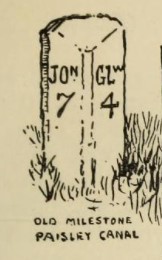
The Glasgow, Paisley, Ardrossan Canal was first proposed by James Watt in 1773. In 1804 a survey by Thomas Telford led to parliamentary permission to build the first phase of the canal from Glasgow to Johnstone. Hugh, 12th Earl of Eglinton, was the chief investor in the project. He had recently built his new deep sea harbour at Ardrossan and was keen to have direct access by canal to Glasgow.  Other investors included William Houston of Johnstone and William Dixon of Govan. A canal in the vicinity of their coal and iron mines would afford them easy access to Glasgow markets. Canal access to Glasgow was expected to be considerably more efficient than transporting goods by wagons on the turnpike roads. Work began in 1805. In addition to transportation of goods, a passenger service was planned.

The first section of the canal, from Paisley to Johnstone, opened on the 6th November, 1810. Amid great celebration the Countess of Eglinton was launched. Four days later, on the Martinmas Day holiday, tragedy struck. When passengers from Johnstone were disembarking at the canal basin in Paisley, an excited crowd of holiday makers on a family day out surged on to the boat causing it to capsize. Of the eighty-five people who lost their lives on this disastrous day at least one quarter were children.

The full stretch of the canal from Glasgow to Johnstone was completed in 1811, but because of the death of the Earl of Eglinton in 1819 and the lack of further funding, construction of the remaining section to Ardrossan was abandoned.

Two more passenger boats, the Paisley and the Countess of Glasgow were added to the fleet. The cabin class fare was 1s.3d. and the second class fare was 10d. In 1814 the canal sold over 35,000 fares and the service was popular with all classes of society.  In 1815 John Cuninghame of Craigends recorded in his diary that he had sent his chaise to Johnstone to meet friends arriving by boat from Glasgow. By 1836 there were twelve passenger sailings per day on the canal.

The Glasgow, Paisley, Ardrossan Canal appears to have been a profitable project for the investors until 1840 when, with the advent of the railways, the canal passenger service had competition. The Glasgow & Paisley Joint Railway opened the first rail line from Glasgow to Paisley in 1840. Rail travel between Paisley and Glasgow was quicker by train than the two hour journey by canal boat and when the rail company reduced its fares in1843 the canal passenger service was no longer viable. Although the passenger service ended in 1843 the canal company continued to transport goods until1869.

The canal became quieter and seems to have become a repository for stolen goods. It is reported that in 1852 brass fittings, and copper piping, stolen from the Kilbarchan horse-drawn fire engine, were found in Johnstone Canal by three local men. Kilbarchan Front Committee gave the men 7s.6d. for the recovery of these valuable fittings.

In 1869 the Glasgow and South Western Railway Company purchased the canal.  This rail company continued to operate the transport of goods on the canal until 1881. In that year they began work to build a second rail line from Glasgow to Paisley, largely following the route of the canal. The canal was drained in 1882 and their Canal Line to Paisley opened in 1885.

©2019 Helen Calcluth